Most jewelers think about jewelry content strategy the same way they think about a photo shoot: one piece, one photo, done. Book the studio, shoot the collection, upload the images, move on. It's a model built for a catalog era — and it's quietly costing jewelers money in an ecommerce era that runs on far more content per product than that model was ever designed to produce.
Here's the shift worth making: stop pricing a shoot per piece. Start pricing it per asset.
The Old Math: Cost Per Shoot
Under the old model, a jewelry photo shoot is a single line-item cost — studio time, a photographer, maybe a stylist — and the output is a handful of images per piece. That math made sense when a product page needed exactly one hero shot and a couple of angles.
It doesn't hold up anymore. A single ring listing today reasonably needs a flat lay, a 360° rotating video, renders in two or three metal finishes, model shots across different skin tones, a written description tuned for search, a short-form video cut for Reels or TikTok, and a cropped image sized for marketplaces like Etsy or Amazon Handmade. That's not one asset. That's potentially a dozen — from one physical ring.
If you're still costing that shoot the old way, you're either underdelivering on what the piece needs (and losing sales to customers who wanted to see a different finish or a model wearing it) or paying for reshoot after reshoot to fill the gap.
The New Math: Cost Per Asset
This is where content yield becomes the more useful metric than shoot cost. If a single capture session costs $150 and produces one photo, that's $150 per asset. If that same $150 session produces twelve usable assets — because the raw capture can be repurposed into finishes, models, formats, and platforms — the real cost per asset drops to roughly $12.50.
Nothing about the piece of jewelry changed. What changed is how many times that one capture gets put to work.

This is the math that separates jewelers who feel like they're constantly behind on content from jewelers who aren't. It's not that the second group shoots more often. It's that they get more out of each shoot.
Where the Twelve Assets Actually Come From
Breaking down "one ring, twelve listings" into what it actually looks like in practice:
- 1 flat lay for the primary product image
- 1 rotating 360° video so customers can see the piece from every angle before buying
- 3 metal-finish variants (yellow gold, white gold, rose gold) generated from the base capture instead of three separate shoots
- 2 model shots across different skin tones, so more customers can picture the piece on themselves
- 1 Shopify-ready written description, tuned for search and consistent in tone across the catalog
- 1 short-form video cut, sized for Reels or TikTok
- 1 marketplace crop, resized for Etsy, Amazon Handmade, or a wholesale catalog
- 2 lifestyle or styled shots, placing the piece in context rather than on a plain background
That's twelve distinct, usable pieces of content — and every one of them came from a single physical piece of jewelry and a single capture session, not twelve separate photo shoots.
Why This Requires Rethinking the Workflow, Not Just the Math
Getting to that yield isn't about shooting more. It's about what happens after the shutter clicks — and that's where most jewelers' current setup breaks down, because their capture tools and their editing tools were never built to talk to each other.
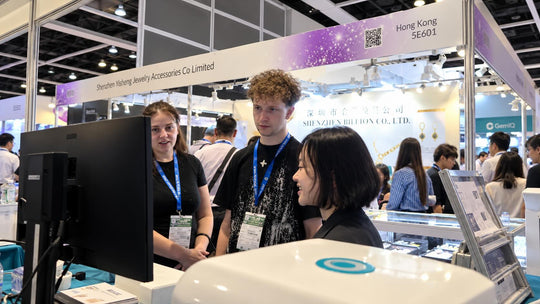
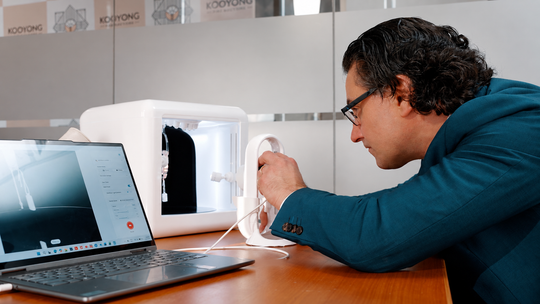
GemLightbox Max is the capture step that starts the chain — a single, repeatable setup that produces consistent, high-quality raw images and 360° video in-house, without a studio booking or a photographer for every variant.
From there, GemStudio is what turns one capture into a portfolio. AI background removal, metal-finish variants, model try-on renders, and generated descriptions all come from that same original photo — which is the actual mechanism behind the cost-per-asset math above. The content yield isn't a hypothetical; it's what the software is built to produce.

And Shopify is where all of it actually gets used — the flat lay as the hero image, the video in the gallery, the description in the listing, the crops pushed out to marketplace channels. One-click publishing means the yield isn't sitting in a folder somewhere; it's live, everywhere it needs to be, without a second round of manual uploading.
What This Means for Your Content Budget
If you're evaluating a jewelry content strategy for the year ahead, the question worth asking isn't "how many shoots can we afford." It's "how many usable assets are we getting out of each shoot we already do."
A jeweler running the old math might budget for four shoots a year and end up with a thin, inconsistent set of product images. A jeweler running the new math can get more total content — more finishes shown, more angles, more formats, more channels — out of fewer sessions, because the yield per session is the thing that changed, not the number of sessions.
That's a better ecommerce photo ROI conversation than "how much does a shoot cost" ever was.
Frequently Asked Questions
What is "content yield" in jewelry ecommerce? Content yield refers to the number of usable marketing and product assets — images, video, descriptions, variants — generated from a single product capture session, rather than treating each shoot as producing just one final image.
How can I repurpose one jewelry photo into multiple listings? Tools like GemStudio use AI to generate metal-finish variants, model try-on renders, and written descriptions from a single source photo, turning one capture into several ecommerce-ready assets without additional photo shoots.
Does more content per shoot actually improve conversion? Showing multiple finishes, angles, and on-model views typically gives shoppers more confidence to purchase without trying a piece on in person, which is one of the biggest friction points in jewelry ecommerce specifically.

The Bottom Line
The jewelers getting the most out of their content budget in 2026 aren't the ones shooting the most often — they're the ones getting the most out of every shoot they do. One ring can be twelve listings. The math only works if the capture and editing workflow is actually built to produce that yield.