Small jewelry business photography has a reputation problem: most solo makers assume it requires something they don't have — a studio, a photographer on retainer, or a few thousand dollars they'd rather put into materials. That assumption is outdated, and it's costing independent makers sales to bigger competitors who simply look more professional online, not because their jewelry is better, but because their photos are.
Here's the reframe worth making: professional-looking product content was never actually about budget size. It was about consistency, lighting, and a workflow that doesn't fall apart when you're a one-person operation.
The Real Problem Isn't Skill — It's Setup
Most solo jewelry makers are capable of taking a decent photo. Phones today have excellent cameras. The problem shows up in three specific places instead: lighting that shifts from piece to piece depending on the time of day, backgrounds that look slightly different across a product page, and the sheer time cost of setting all of that up correctly for every single item.
A big brand solves this with a studio and a dedicated photographer who repeats the same setup every time. A solo maker solves it — or doesn't — by hand, piece by piece, usually squeezed in between actually making the jewelry. That inconsistency is what reads as "small business" to a shopper, more than the size of the maker's Instagram following ever does.
What "Competing Online" Actually Requires
Shoppers browsing a solo maker's Shopify store next to a bigger brand's site aren't consciously comparing production budgets. They're reacting to a handful of concrete signals: Does every product photo look like it belongs on the same site? Can I see the piece clearly enough to trust what I'm buying? Is there a video or multiple angles, or just one flat image?
None of those signals require a studio. They require consistency — the same lighting, the same background, the same level of clarity, applied to every single item in the shop, whether that's five pieces or five hundred.

That's a workflow problem, not a budget problem. And it's solvable at a scale that makes sense for a one-person business.
Building a Workflow That Fits a One-Person Studio
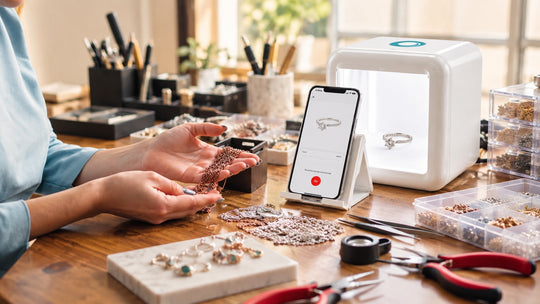
For a solo maker, the setup has to clear a specific bar: it needs to fit on a desk, not require a second person to operate, and produce something usable in minutes rather than a half-day photo session — because that time is coming directly out of production time, not out of a marketing budget line item.
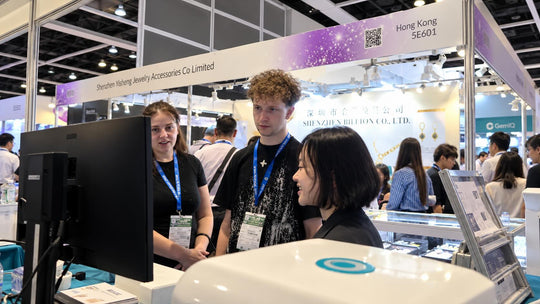
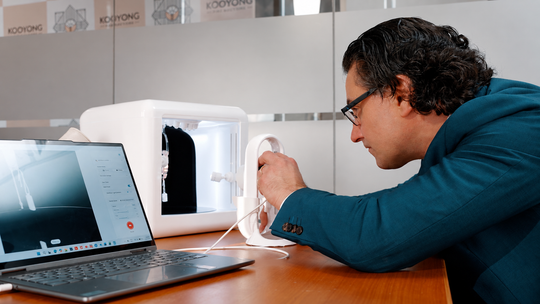
This is the gap GemLightbox Mini was built for. It's compact enough to live on a workbench rather than take over a room, doesn't require photography experience or a second set of hands, and delivers the same consistent lighting every time — which is the actual thing that makes a small catalog look cohesive rather than assembled piece by piece over months.
From there, the same GemIQ software used across the GemLightbox line handles what used to require outside help entirely: AI background removal so every photo matches, AI-generated descriptions so listings don't fall behind while the maker is busy actually making jewelry, and one-click publishing to Shopify so a finished piece can go from workbench to storefront the same day it's made.

What This Changes for a Small Catalog
The compounding effect matters more for a solo maker than it does for a large brand. A twenty-piece catalog where every photo is consistent looks intentional and established. The same twenty pieces shot inconsistently over several months — different lighting, different backgrounds, different quality — looks like what it often is: a hobby that hasn't quite become a business yet, even when the jewelry itself is excellent.
Closing that gap doesn't require competing with a big brand's budget. It requires closing the consistency gap, which is a workflow decision, not a spending decision.

Frequently Asked Questions
Do I need a professional photographer to sell jewelry online? No. Consistent lighting and background matter more than who's behind the camera. A repeatable capture setup can produce professional-looking results without hiring a photographer for every new piece.
How much does it cost to start photographing jewelry professionally as a solo maker? The ongoing cost is largely time, not money, once a consistent setup is in place. A compact, purpose-built capture tool typically costs less than a single professional photo session and pays for itself after a handful of uses.
What matters most for small jewelry business photography — the camera or the setup? The setup. Lighting consistency and background consistency across every product photo matter more to how a shop reads to shoppers than camera quality alone.
The Bottom Line
Small jewelry business photography was never really about matching a big brand's budget. It's about matching their consistency — the thing that actually signals "real business" to a shopper scrolling past dozens of similar listings. That's achievable at a one-person scale, on a workbench, without turning photography into a second job.